
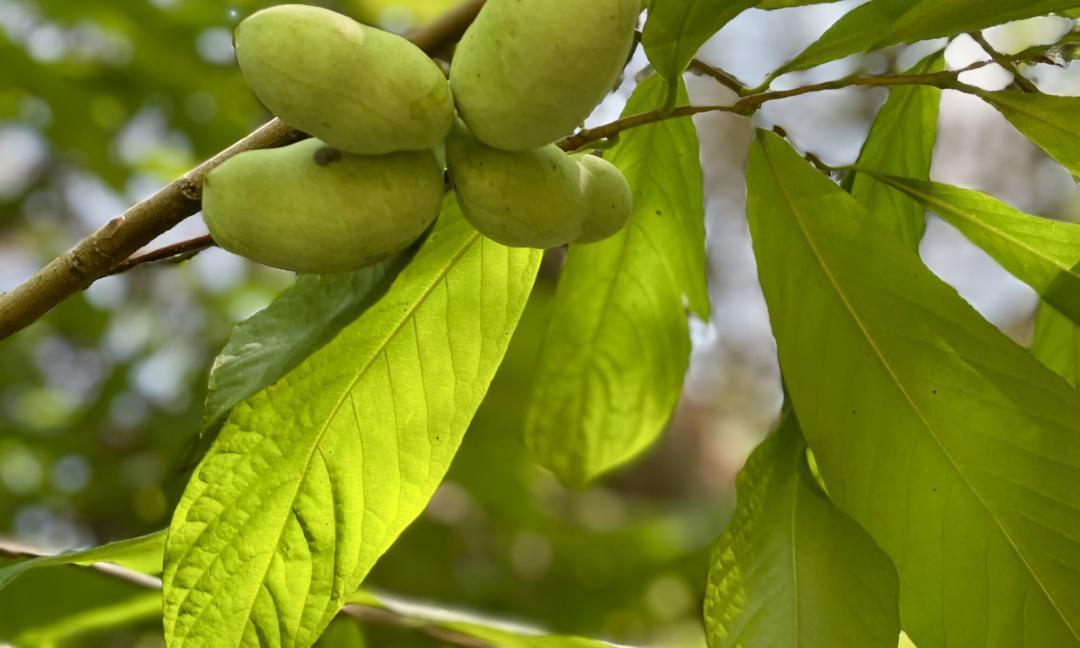
Historic and traditional importance
Pawpaw is hardly a new thing that grows under the sun; indigenous people and early settlers of North America were naturally locavores, and vitamin-C-rich pawpaws were a staple of diets from the midwest to most of the Eastern Seaboard. They are the largest North American edible fruit and were made into nutritious foods, including cakes and drinks.
Festival organizers encourage people to bring their champion pawpaws and recipes, using local foods.
Every part of the tree can be useful; Cherokee used the inner bark to make ropes.
Today, butterfly gardeners also prize pawpaw trees as edible ornamentals, attracting zebra swallowtails. In their caterpillar stage, pawpaws are their favorite food.
Taste fresh — handle with care
Ripening in late August through October, pawpaws are described as having a creamy, custard-like flesh with a sweet tropical flavor profile resembling a cross between banana, mango and pineapple. They're not sold in standard grocery stores because the fruit is extremely fragile, bruises easily, and has a very short shelf life of two to three days once ripe. And, unlike some other fruits, they do not continue to ripen once harvested.
Although never common, some commercial cultivation of pawpaws remains, mostly in Ohio.
Some of these native pawpaw trees (asimina triloba) — they can also be classified as large shrubs — settlers found growing wild are now heritage, or heirloom, plants, meaning their seeds have been passed down generation to generation to keep a pawpaw's special characteristics.
The University of Tennessee Institute of Agriculture noted a resurgence in the pawpaw tree’s popularity and offered tricks and tips for pawpaw growers, harvesters and the just plain pawpaw-curious.